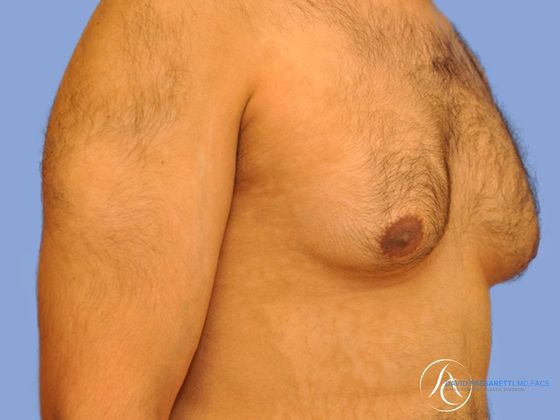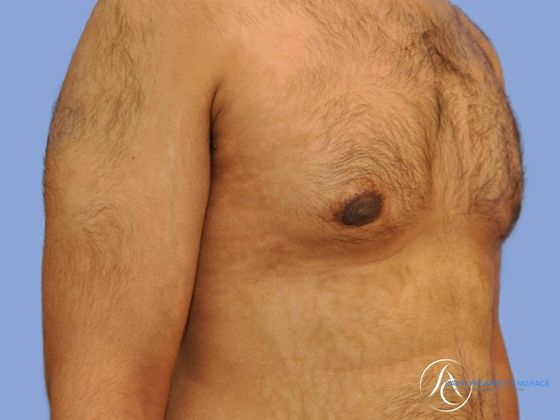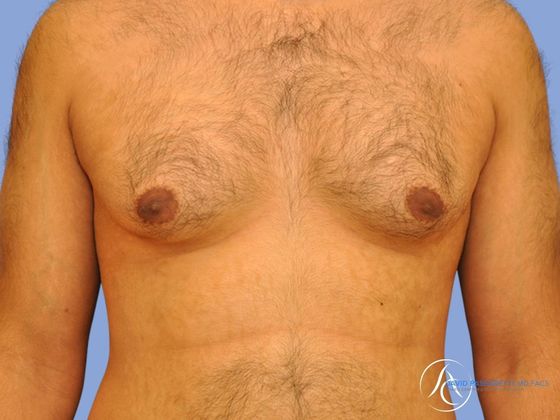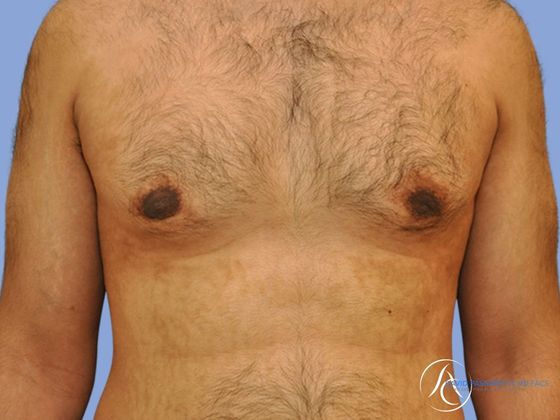


Gynecomastia, which is the overdevelopment of male breasts, affects an estimated 40 to 60 percent of men. It can be the result of hormonal imbalance, obesity, certain drugs or heredity, and can affect one or both breasts.
Candidates for breast reduction are men who have large or sagging breasts that make them feel physically and/or emotionally uncomfortable. Breast reduction can be performed on men whose breast development is complete, are in good health both physically and emotionally, do not smoke, and are not overweight. Ideally, candidates have firm, elastic skin that will reshape itself to fit the contours of their breasts post surgery.
Gynecomastia surgery can improve both physical comfort and overall confidence. Many men find that reducing excess tissue allows clothing to fit properly, restores a more proportional chest contour, and removes the constant self-consciousness that often comes with the condition. The procedure can also ease physical discomfort caused by excess weight in the chest area and make exercise and daily movement feel more natural.
Benefits of gynecomastia surgery include:
Candidates for gynecomastia surgery are typically men who experience persistent fullness, puffiness, or enlarged breast tissue that does not improve with weight loss or lifestyle changes. Most patients are in good overall health, at or near a stable weight, and have realistic expectations about the outcome. Treatment may be appropriate for men whose gynecomastia is caused by genetics, hormonal imbalance, weight fluctuations, puberty-related changes, or medication effects that have already been addressed.
Ideal candidates are non-smokers or willing to stop smoking before surgery, as nicotine can impair healing. Those with certain untreated medical conditions or ongoing hormonal abnormalities may need evaluation before moving forward. Men whose breast development is still changing, such as adolescents, may be advised to wait until their chest has stabilized. During your consultation, your surgeon will determine whether your symptoms are caused by excess fat, glandular tissue, loose skin, or a combination of these factors and recommend the safest and most effective approach.
At The Aesthetic Center in Fairfield County male breast reduction is usually performed under general anesthesia on an outpatient basis, and typically takes 1 to 3 hours. Male breast reduction is performed using liposuction or surgery, or a combination of the two.
If the enlarged breasts are caused primarily by excessive fatty tissue, the tissue is typically removed with liposuction, during which a cannula (a thin, hollow tube) is inserted through extremely small incisions, and then moved back and forth to loosen excess fat, which is suctioned out using a vacuum or a cannula-attached syringe. The incisions are made around the lower halves of the areolas or in the underarms.
If the enlarged breasts are caused primarily by excess glandular tissue, surgery is required. Incisions are made to allow for tissue to be removed. Repositioning the areolas/nipples and excising excess skin also requires incisions. Sutures are used to close the incisions, which are then bandaged, and the area is typically covered by a compression garment.
Following male breast reduction surgery, there is bruising, swelling and discomfort. Discomfort usually dissipates after a few days, and can be lessened with prescribed pain medication. To help reduce swelling, the compression garment is worn for about 2 weeks, and at night for several additional weeks.
Swelling and any skin discoloration partially subside after 1 or 2 weeks, at which time stitches are removed. Following gynecomastia surgery Connecticut patients typically return to work within a week. Light aerobic exercise can be performed after a week, but strenuous activities should be avoided for 4 to 6 weeks.
Most patients notice an immediate improvement in chest contour once swelling begins to subside. Early results can be seen within the first several weeks, though residual swelling may continue to refine for several months. As the tissues settle, the chest takes on a more sculpted, natural appearance. Final results are typically visible around three to six months after surgery.
With a stable weight and healthy lifestyle, results are generally long-lasting. When gynecomastia is caused by glandular overgrowth, the removed tissue will not grow back. Patients whose gynecomastia stemmed from medication or hormone-related factors should work with their care providers to ensure these triggers are no longer active in order to maintain their outcome.
In addition to the risks associated with surgery and anesthesia, those related to male breast reduction include the following:
The results of gynecomastia surgery are usually permanent, as long as the patient’s weight remains stable. If drugs were the cause of the condition, the patient must permanently stop taking them to maintain results.
The cost of gynecomastia surgery varies based on the complexity of the procedure and the techniques needed to achieve the most natural result. Some patients require liposuction alone, while others may need glandular tissue removal, skin tightening, or repositioning of the areola. Combination procedures can change the overall cost as well.
Fees generally include the surgeon’s expertise, anesthesia, operating room use in our accredited private surgical facility, pre-operative and post-operative visits, and all required garments or dressings. Because each case is customized, the best way to receive an accurate estimate is through a personal consultation.
The Aesthetic Center offers a level of training, experience, and safety that is difficult to match in Fairfield County. Our board-certified plastic surgeons trained at leading institutions, including Yale, Harvard, Penn, and Stanford, bringing advanced surgical skill to each case. Patients receive care in a state-licensed, AAAASF-accredited private surgical center known for exceptional safety standards, including a 0% infection rate in more than 600 breast implant surgeries.
Our team works closely together to provide consistent, individualized care, from consultation through recovery. With a reputation supported by Castle Connolly, Vitals, New York Magazine, Connecticut Magazine, and hundreds of five-star patient reviews, The Aesthetic Center remains a trusted destination for natural, long-lasting gynecomastia surgery results.
Most procedures take one to three hours, depending on whether liposuction, glandular tissue removal, or a combination of both is required.
Incisions are typically placed around the edge of the areola or in the underarm area. Most scars fade significantly over time and become difficult to detect.
Results are usually permanent as long as weight remains stable and any underlying causes, such as hormonal imbalance or medications, are addressed.
If the condition is caused primarily by excess fat, liposuction may be sufficient. When glandular tissue or loose skin is present, surgical excision provides a more effective result.
Light activity can resume after about one week, but strenuous chest workouts should be avoided for four to six weeks to allow proper healing.
Yes. Puffy or protruding nipples are often due to excess glandular tissue beneath the areola, which can be reduced or removed during surgery.
If you are considering plastic surgery in Fairfield County or anywhere in Connecticut, contact us to schedule a one-on-one consultation with one of our expert plastic surgeons.
722 Post Road, Suite 202, Darien, CT 06820